
Study Abroad · USD
Study in the United States
Official facts on this page last checked 25 Sept 2026.
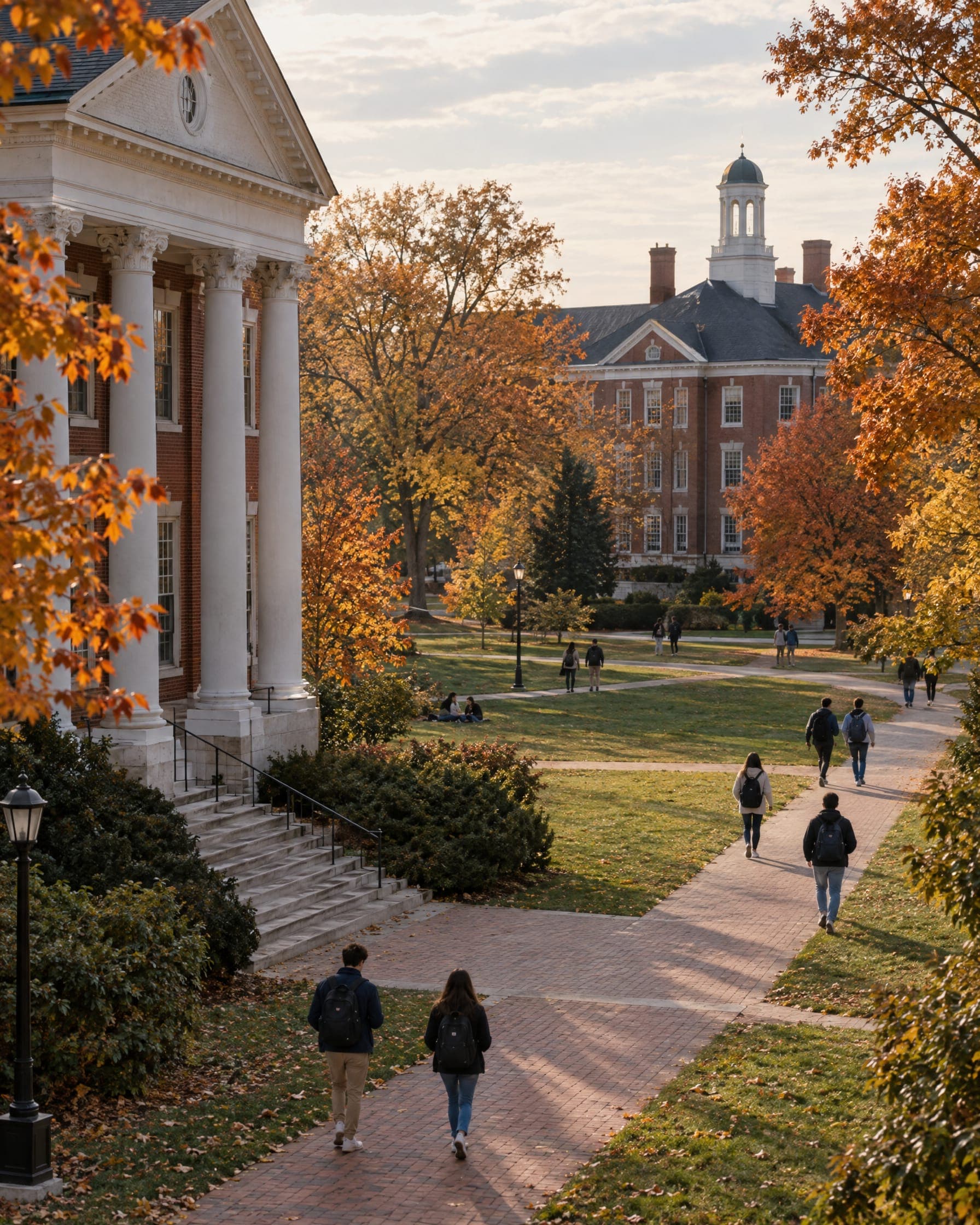
Why students choose the United States
The United States has one of the widest choices of universities and colleges anywhere, with flexible degree structures that let you explore subjects before you commit to a major. Many institutions offer merit-based scholarships, and Orbit has helped many students prepare competitive applications for them.
Flexible degrees
Undergraduate programmes usually combine a major with general education, so you can explore before you specialise.
Merit scholarships
Many universities award scholarships based on academic record and test scores. Awards are competitive and vary by institution.
Research and industry links
Graduate programmes often include research, internships or practical training linked to your field.
Intakes: Most universities admit for Fall (August/September); many also admit for Spring (January).
Degree levels and popular subjects
Degree levels
- Associate degree
- Bachelor's degree
- Master's degree
- Doctoral degree (PhD)
Popular subject areas
- Computer science and IT
- Business and analytics
- Engineering
- Health and life sciences
- Economics
- Data science
Typical requirements
Every institution and course is different
Academic
- Undergraduate: completed +2 (or equivalent) transcripts; some universities also consider SAT scores.
- Graduate: a recognised bachelor's degree; some programmes ask for GRE or GMAT scores.
- Minimum grades, prerequisites and test policies are set by each university and each course.
Study gaps
A gap after +2 or a bachelor's degree does not automatically stop an application, but universities and visa officers may ask what you did during that time. Keep evidence of work, study or other activities. Whether a gap is acceptable is decided by each institution and, for the visa, by the consular officer.
Tuition and living costs
Currency: US dollar (USD). Amounts change — see the official figures and dates below.
Tuition
Tuition is set by each institution and varies widely between public and private universities, states and programmes. Your university's I-20 lists its estimated cost of attendance.
Living costs
Living costs depend on the city and your lifestyle. Your university's estimated cost of attendance, shown on the I-20, is the most reliable planning figure.
Orbit offers financial guidance and bank-loan services; loan decisions are made by the lender. Plan your finances
Scholarships
Fulbright Master's (Nepal)
USEF-Nepal (Fulbright Commission) · Master's
Master's degree study in the United States. See USEF-Nepal for current coverage details.
Check USEF-Nepal for the current application cycle.
Scholarships are competitive and eligibility varies. Search all scholarships
How to apply
- 01
Shortlist
Match universities to your grades, budget, test scores and goals with an Orbit counsellor.
- 02
Prepare tests
Plan English and any required SAT, GRE or GMAT test dates around application deadlines.
- 03
Apply
Submit applications, essays and recommendation letters through each university's portal.
- 04
Receive your I-20
After admission and financial documents are accepted, the university issues Form I-20.
- 05
Pay SEVIS and apply for the visa
Pay the I-901 SEVIS fee, complete the DS-160 and book your visa interview.
- 06
Prepare for the interview
Practise explaining your study plan, finances and ties clearly and honestly.
Application checklist
- Valid passport
- Academic transcripts and certificates
- English test score report (if required)
- SAT / GRE / GMAT scores (if required)
- Statement of purpose or essays
- Letters of recommendation
- Financial documents (bank statements, sponsor letters, loan letters if applicable)
- Form I-20 from your university
Your university or the visa authority may ask for more; Orbit confirms your exact list.
F-1 student visa
Students admitted to an SEVP-certified school receive Form I-20, pay the I-901 SEVIS fee, complete the DS-160 online form and attend a visa interview at the U.S. Embassy.
Steps
- 1Receive Form I-20 from your SEVP-certified school
- 2Pay the I-901 SEVIS fee
- 3Complete the DS-160 and pay the visa application fee
- 4Schedule and attend your visa interview
Documents usually needed
- Passport
- Form I-20
- DS-160 confirmation page
- SEVIS fee payment receipt
- Visa fee payment receipt
- Academic and financial documents
Admission, scholarship, loan and visa decisions are made by the relevant institution, lender or government authority and depend on each student's circumstances. Orbit guides and prepares you; it cannot guarantee an outcome.
Key facts and official sources
Fees, funds and work rights change. Each figure shows its official source and the date Orbit last checked it. Where we couldn't confirm a figure, we send you to the official page instead of guessing.
- I-901 SEVIS fee (F-1)
US$350
Checked 25 Sept 2026ICE — I-901 SEVIS Fee(opens official source in a new tab)
- Visa application (MRV) fee
Check official sourceCheck the current fee on the U.S. Department of State fee page before paying.
Checked 25 Sept 2026U.S. Department of State — Fees for Visa Services(opens official source in a new tab)
- On-campus work
Up to 20 hours per week while school is in session
Checked 25 Sept 2026Study in the States — Working in the United States(opens official source in a new tab)
- Period of admission for F students
From 15 Sept 2026, new F students are admitted for a fixed period up to the programme length on the I-20 (maximum four years), plus 30 days before and 30 days after.
Checked 25 Sept 2026Study in the States — Fixed time period of admission (final rule)(opens official source in a new tab)
- Optional Practical Training (OPT)
Check official sourceOPT and STEM OPT eligibility and length are set by DHS. Confirm current rules with your school's designated school official.
Checked 25 Sept 2026Study in the States — Training(opens official source in a new tab)
Official websites
Questions students ask
Do I need the SAT for undergraduate admission?
It depends on the university. Some require it, some are test-optional and some do not consider it. A strong SAT score can still help scholarship applications at many institutions. Check each university's admissions page.
Can Orbit guarantee a full scholarship?
No. Scholarships are awarded by universities and are competitive. Orbit helps you find suitable universities and prepare the strongest honest application you can.
When should I start preparing?
Many students start 9–12 months before their intended intake so there is time for tests, applications and visa preparation.
Ready to apply to the United States?
Share your profile and documents, and an Orbit counsellor will review realistic options with you.