
Study Abroad · AUD
Study in Australia
Official facts on this page last checked 25 Sept 2026.
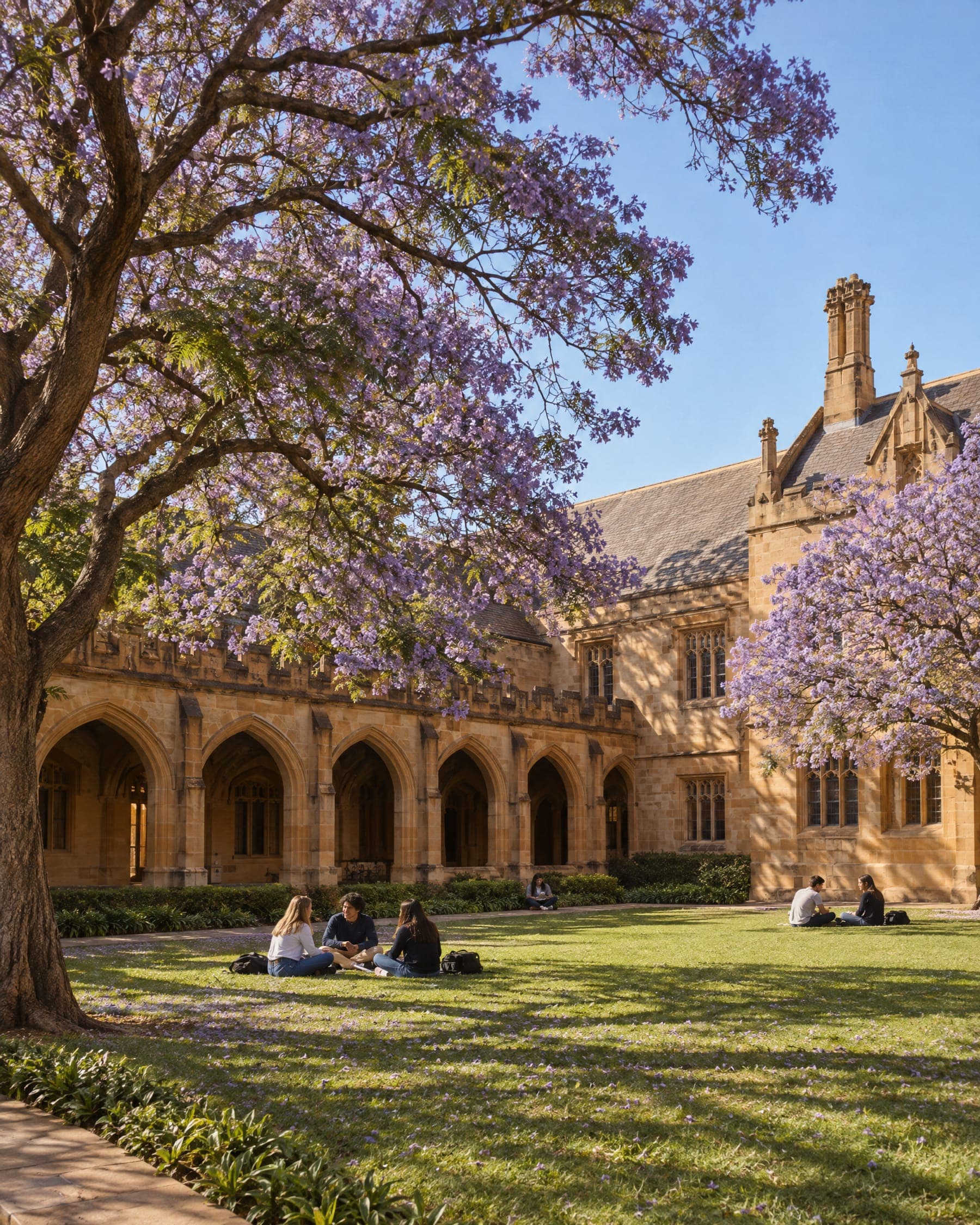
Why students choose Australia
Australia's universities and vocational providers offer practical, industry-connected courses. Student visa holders can work part-time during study periods, and eligible graduates may apply for a Temporary Graduate visa.
Career-focused courses
Many programmes include placements, projects or industry partners.
Work while studying
Student visa holders can work a limited number of hours during study periods.
Graduate pathways
The Temporary Graduate visa (subclass 485) lets eligible graduates stay and work for a period.
Intakes: Main intakes are February/March and July; some providers offer additional intakes.
Degree levels and popular subjects
Degree levels
- Diploma / VET
- Bachelor's degree
- Master's by coursework
- Master's by research
- PhD
Popular subject areas
- Nursing and health
- IT and cyber security
- Accounting
- Engineering
- Hospitality
- Education
Typical requirements
Every institution and course is different
Academic
- Undergraduate: +2 results that meet the provider's minimum requirement.
- Postgraduate: a recognised bachelor's degree; some courses require relevant work experience.
- Requirements differ by provider and course.
Study gaps
Providers and the Department of Home Affairs may look at gaps as part of assessing whether you are a genuine student. Explain any gap clearly with evidence. There is no single rule that applies to everyone.
Tuition and living costs
Currency: Australian dollar (AUD). Amounts change — see the official figures and dates below.
Tuition
Tuition is set by each provider and course and appears on your Confirmation of Enrolment (CoE).
Living costs
The Department of Home Affairs sets the financial capacity evidence required for the visa. Check the current amount on the official page before preparing documents.
Orbit offers financial guidance and bank-loan services; loan decisions are made by the lender. Plan your finances
Scholarships
Australia Awards Scholarships (Nepal)
Australian Government (DFAT) · Master's
Full-time postgraduate study in Australia. See DFAT's intake information for what the award covers.
DFAT states applications open 1 February and close 30 April each year. Confirm the current round on DFAT.
DFAT — Nepal Australia Awards intake information(opens official source in a new tab)
Scholarships are competitive and eligibility varies. Search all scholarships
How to apply
- 01
Choose a provider
Shortlist CRICOS-registered courses that fit your goals, budget and entry requirements.
- 02
Apply and get an offer
Submit academic documents, English results and a statement where requested.
- 03
Accept and receive CoE
Accept the offer, pay the required deposit and arrange Overseas Student Health Cover.
- 04
Lodge the visa
Apply for the subclass 500 visa online through ImmiAccount.
- 05
Health and biometrics
Complete any requested health examinations and biometrics.
Application checklist
- Valid passport
- Confirmation of Enrolment (CoE)
- Academic transcripts and certificates
- English test results
- Evidence of financial capacity
- Overseas Student Health Cover (OSHC)
- Statement addressing the genuine student requirement (as requested)
Your university or the visa authority may ask for more; Orbit confirms your exact list.
Student visa (subclass 500)
You need a Confirmation of Enrolment in a registered course, health insurance, and to meet the genuine student, financial and English requirements set by the Department of Home Affairs.
Steps
- 1Receive your CoE
- 2Arrange OSHC
- 3Apply online through ImmiAccount and pay the visa charge
- 4Complete health checks and biometrics if requested
Documents usually needed
- Passport
- CoE
- OSHC
- Financial evidence
- English evidence
- Academic documents
Admission, scholarship, loan and visa decisions are made by the relevant institution, lender or government authority and depend on each student's circumstances. Orbit guides and prepares you; it cannot guarantee an outcome.
Key facts and official sources
Fees, funds and work rights change. Each figure shows its official source and the date Orbit last checked it. Where we couldn't confirm a figure, we send you to the official page instead of guessing.
- Student visa application charge
From A$2,500 per application (from 1 July 2026, unless exempt)
Checked 25 Sept 2026Study Australia — Student visa (subclass 500)(opens official source in a new tab)
- Work during study periods
Up to 48 hours per fortnight (no limit for master's by research and doctoral students)
Checked 25 Sept 2026Study Australia — Student visa (subclass 500)(opens official source in a new tab)
- Temporary Graduate visa (subclass 485)
Post-Higher Education Work stream: 2–3 years depending on qualification; Post-Vocational Education Work stream: up to 18 months
Applicants must generally be 35 or under (exceptions apply).
Checked 25 Sept 2026Study Australia — Temporary Graduate visa(opens official source in a new tab)
- Financial capacity amount
Check official sourceCheck the current amount with the Department of Home Affairs.
Checked 25 Sept 2026Department of Home Affairs — Student visa (subclass 500)(opens official source in a new tab)
Official websites
Questions students ask
What is the genuine student requirement?
Home Affairs assesses whether you genuinely intend to study. You may be asked to explain your study plans, circumstances and any gaps. Answer honestly and back it with documents.
Can I work while I study?
Yes, within limits. During study periods the current limit is 48 hours per fortnight for most students. Check Home Affairs for the current rule.
Ready to apply to Australia?
Share your profile and documents, and an Orbit counsellor will review realistic options with you.