
Study Abroad · EUR
Study in Ireland
Official facts on this page last checked 25 Sept 2026.
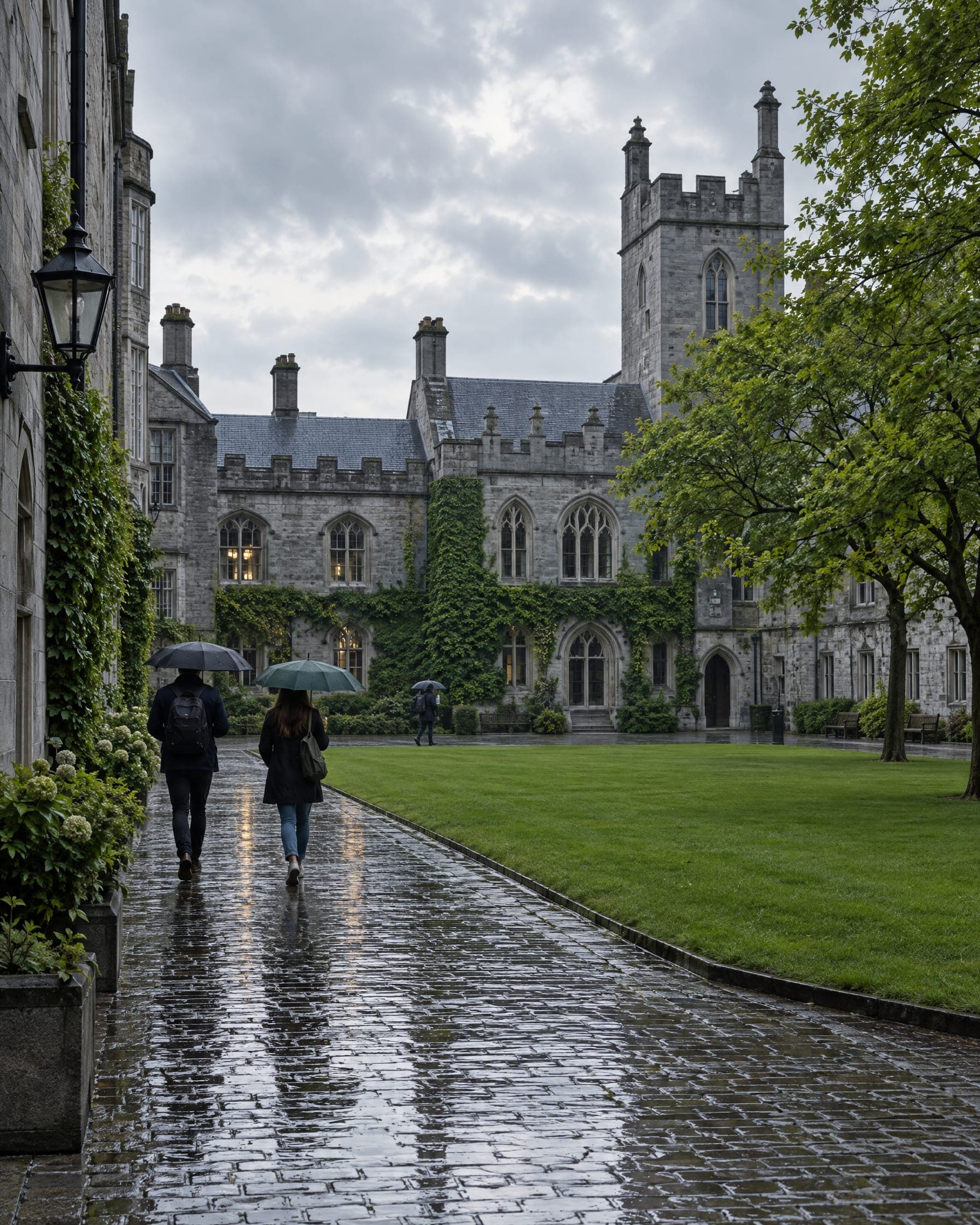
Why students choose Ireland
Ireland combines English-language study with a location inside the European Union. Many international students choose one-year master's programmes, and eligible graduates may stay to look for work under the Third Level Graduate Programme.
English-speaking EU
Study in English while living in a European Union country.
Industry sectors
Ireland hosts many technology, pharmaceutical and financial services employers.
Stay-back option
Eligible graduates can apply for Stamp 1G to seek graduate employment.
Intakes: September is the main intake; some programmes start in January.
Degree levels and popular subjects
Degree levels
- Bachelor's degree (Level 8)
- Master's degree (Level 9)
- Postgraduate diploma (Level 9)
- PhD (Level 10)
Popular subject areas
- Data analytics
- Computer science
- Business and finance
- Pharmaceutical science
- Engineering
- Marketing
Typical requirements
Every institution and course is different
Academic
- Institutions set their own academic requirements for each programme.
- Postgraduate courses usually require a relevant bachelor's degree with a minimum grade.
Study gaps
Gaps are considered by each institution and, for visas, by Immigration Service Delivery. Explain gaps with evidence; there is no universal rule.
Tuition and living costs
Currency: euro (EUR). Amounts change — see the official figures and dates below.
Tuition
Tuition is set by each institution and programme.
Living costs
For immigration purposes you must show immediate access to a set amount for living costs (see the facts below).
Orbit offers financial guidance and bank-loan services; loan decisions are made by the lender. Plan your finances
Scholarships
Government of Ireland International Education Scholarship
Higher Education Authority, Ireland · Master's, Postgraduate diploma, PhD
€10,000 stipend for one year and a full fee waiver from the host institution. 60 awards each year.
Check the HEA page for the current round's dates.
Scholarships are competitive and eligibility varies. Search all scholarships
How to apply
- 01
Choose a programme
Shortlist eligible programmes at recognised institutions.
- 02
Apply and accept
Apply, receive an offer and pay the required fees or deposit.
- 03
Prepare finances
Gather evidence of funds and private medical insurance.
- 04
Apply for the study visa
Apply online through AVATS and submit documents as instructed.
- 05
Register on arrival
Register your immigration permission (Stamp 2) after you arrive.
Application checklist
- Valid passport
- Letter of acceptance
- Evidence of fees paid
- Evidence of funds
- Private medical insurance
- Academic and English documents
Your university or the visa authority may ask for more; Orbit confirms your exact list.
Long-term study visa (D visa) and Stamp 2
Apply online for a study visa, then register your Stamp 2 immigration permission after you arrive.
Steps
- 1Complete the AVATS online application
- 2Submit documents and pay the visa fee
- 3Travel and register for Stamp 2
Documents usually needed
- Passport
- Letter of acceptance
- Fee receipts
- Evidence of funds
- Medical insurance
Admission, scholarship, loan and visa decisions are made by the relevant institution, lender or government authority and depend on each student's circumstances. Orbit guides and prepares you; it cannot guarantee an outcome.
Key facts and official sources
Fees, funds and work rights change. Each figure shows its official source and the date Orbit last checked it. Where we couldn't confirm a figure, we send you to the official page instead of guessing.
- Living-cost evidence
Immediate access to at least €10,000 for each academic year
Checked 25 Sept 2026Immigration Service Delivery — Student finances(opens official source in a new tab)
- Work on Stamp 2
20 hours per week during term; 40 hours per week in set holiday periods
Checked 25 Sept 2026Immigration Service Delivery — Immigration permission/stamps(opens official source in a new tab)
- Third Level Graduate Programme (Stamp 1G)
12 months for Level 8 graduates; up to 24 months for Level 9 and above (time limits apply)
Checked 25 Sept 2026Immigration Service Delivery — Third level graduate programme(opens official source in a new tab)
- Study visa fee
Check official sourceCheck the current visa fee with Immigration Service Delivery.
Checked 25 Sept 2026Immigration Service Delivery — Study in Ireland(opens official source in a new tab)
Official websites
Questions students ask
How much money do I need to show?
Immigration Service Delivery requires evidence of immediate access to at least €10,000 for each year of study, in addition to fees.
Can I stay after graduating?
Eligible graduates can apply for Stamp 1G under the Third Level Graduate Programme: 12 months for Level 8, up to 24 months for Level 9 and above, subject to time limits.
Ready to apply to Ireland?
Share your profile and documents, and an Orbit counsellor will review realistic options with you.